The school embraces a progressive, learner-centric pedagogical framework that transforms the classroom into a dynamic space for inquiry, colaboration, experimentation, and inte lectual engagement. Our teaching methodology moves beyond information transmission and places greater emphasis on conceptual understanding, experiential learning, and the practical application of knowledge. Teachers employ a diverse repertoire of strategies, including interactive discussions, project-based learning, case studies, demonstrations, presentations, laboratory experiences, and digital learning resources.
Competency-based pedagogy enables students to analyse situations, evaluate alternatives, solve problems, and apply concepts across varied contexts. Educators function as facilitators and mentors, creating an inclusive environment in which students feel encouraged to question, investigate, articulate their perspectives, and learn from experience. Differentiated instruction and continuous feedback further ensure that individual learning needs are acknowledged and addressed.
The overarching objective is to foster inte lectual autonomy, creativity, co laboration, and adaptability. Such a pedagogical ecosystem empowers learners to become active participants in their educational journey and equips them with the competencies required to navigate an increasingly complex and interconnected world.
At Oxford International Academy, we believe that meaningful education goes beyond academic knowledge. Our learning approach focuses on the 4 Cs - Critical Thinking, Creativity, Communication and Collaboration empowering students with the skills they need to learn, adapt and succeed in a changing world.
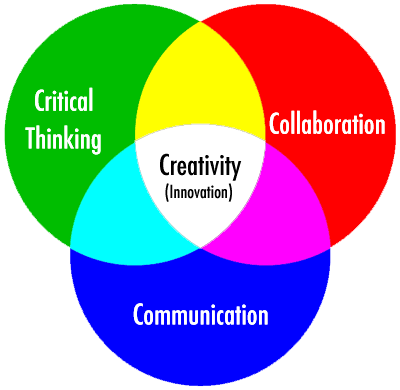
Students learn to analyse evidence, question assumptions, evaluate ideas and find effective solutions to complex problems..
Students develop the confidence to express their thoughts, questions and solutions clearly through speaking, writing and digital media, while also becoming attentive and respectful listeners.
Through teamwork and shared learning experiences, students learn to respect diverse perspectives, take responsibility, support one another and work together towards common goals.
We encourage students to think differently, explore new possibilities, experiment with ideas and transform their imagination into meaningful innovations.
Teachers employ a diverse repertoire of strategies designed to make learning interactive, meaningful, practical, and relevant to the needs of every learner.
Classroom discussions encourage students to express ideas, ask questions, challenge assumptions, and develop confident communication skills.
Students work on meaningful projects that encourage research, collaboration, creativity, planning, and practical problem-solving.
Real-world and contextual case studies help students analyse situations, evaluate alternatives, and make informed decisions.
Demonstrations make abstract concepts more accessible by connecting theoretical knowledge with observable practical experiences.
Learners develop confidence, communication, research, and presentation skills by articulating and sharing their understanding.
Hands-on laboratory activities provide opportunities for experimentation, observation, discovery, and evidence-based learning.
Digital resources and technology-enhanced learning provide students with access to diverse learning materials and interactive experiences.
Students develop the ability to analyse, evaluate, solve problems, and apply concepts across varied academic and real-world contexts.
Regular feedback helps learners understand their progress, identify areas for improvement, and take greater ownership of their learning.
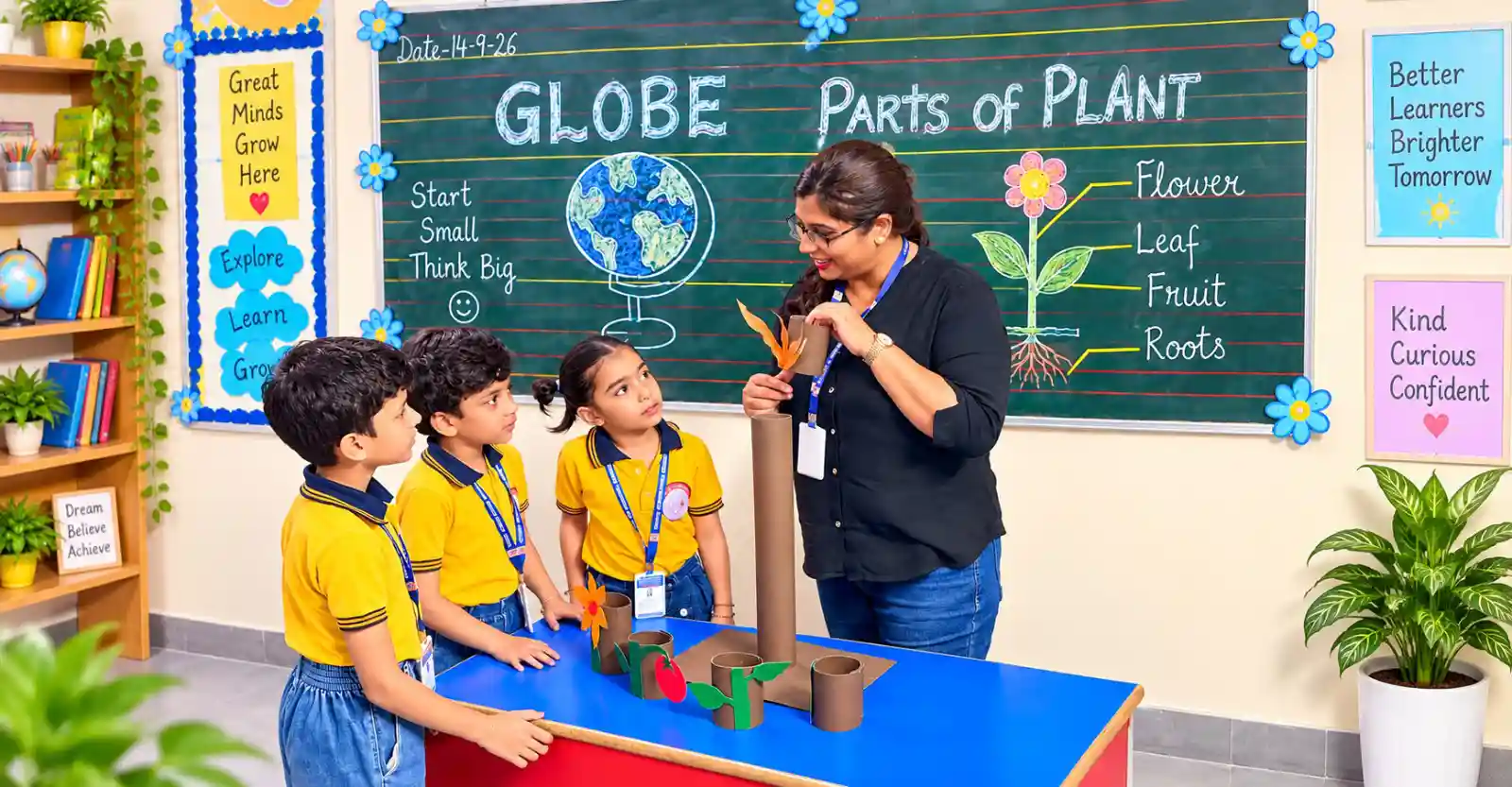
Educators function as facilitators and mentors, creating an inclusive environment in which students feel encouraged to question, investigate, articulate their perspectives, and learn from experience. Differentiated instruction and continuous feedback further ensure that individual learning needs are acknowledged and addressed.
Students develop the confidence and ability to think independently, question ideas, and form reasoned perspectives.
Learners are encouraged to explore new ideas, experiment with possibilities, and approach challenges creatively.
Students learn to work effectively with diverse individuals while communicating ideas and respecting different perspectives.
Learners develop the flexibility and competencies required to respond confidently to an increasingly complex and interconnected world.